
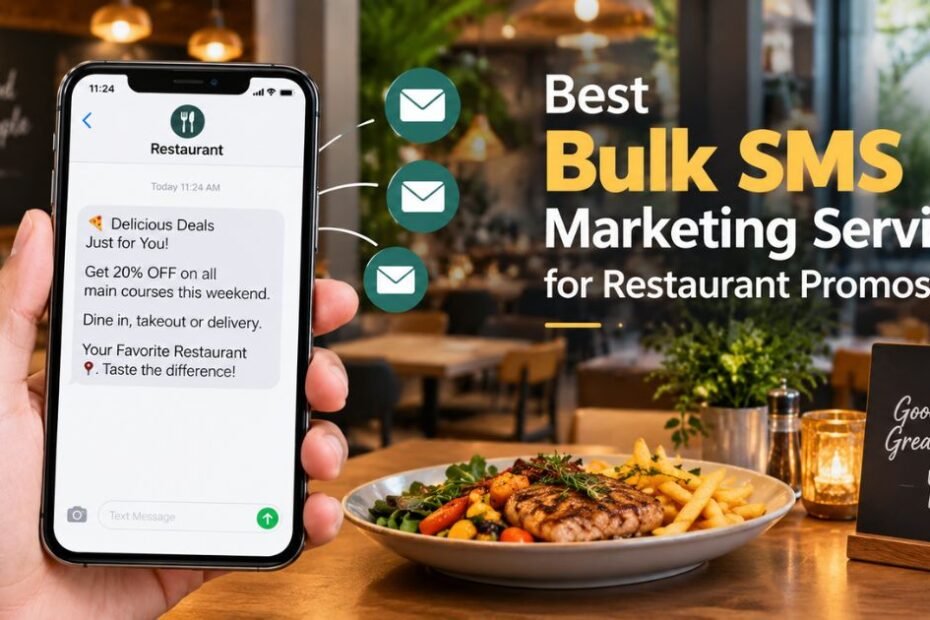
There’s no single “best” bulk SMS service there’s a best fit. EZ Texting or SimpleTexting suit a single independent location watching every dollar. SlickText is the strongest all-around pick for restaurants and small multi-location groups that want list growth, automation, and two-way texting without a developer. SleekFlow fits groups juggling SMS, WhatsApp, and Instagram in one inbox. Attentive and Klaviyo serve larger chains with dedicated marketing teams, and Twilio or Bird suit teams building fully custom messaging infrastructure.
Comparison at a Glance
| Platform | Best For | Two-Way Texting | Automation | Multi-Location | Starting Price |
| EZ Texting | Single-location budget pick | Basic inbox | Limited | Limited | ~$25/month + message credits |
| SimpleTexting | Two-way conversations, keyword clubs | Yes, team inbox | Autoresponders | Limited | ~$39/month |
| SlickText | All-in-one for independents & small groups | Yes, collaborative inbox | Advanced | Yes | $29/month for 500 messages |
| Textedly | Simple promos + text-to-pay | Yes | Limited | Limited | $29/month for 500 messages |
| SleekFlow | Multi-channel (SMS + WhatsApp + Instagram) with AI replies | Yes, AI-assisted | Advanced | Yes | Free plan; paid from ~$149/month |
| Klaviyo | Unified email + SMS, deep segmentation | Yes | Advanced | Yes | $35/month for 500 contacts/messages |
| Attentive | Enterprise chains and franchise groups | Yes | Advanced | Yes | ~$300/month platform fee + message credits |
| Twilio / Bird | Fully custom, developer-built messaging | Custom-built | Custom-built | Custom-built | Usage-based |
Pricing reflects entry-level published tiers as of 2026 and typically excludes per-message carrier fees. Confirm current numbers directly with each vendor before buying, since SMS pricing changes often.
What Is Bulk SMS Marketing for Restaurants?
Bulk SMS marketing for restaurants is the practice of sending promotional text messages specials, loyalty offers, event reminders to a list of guests who have opted in to receive them. A dedicated platform handles the sending, list segmentation, opt-in/opt-out compliance, and (increasingly) the replies those texts generate.
The category splits along one real fault line in 2026: tools that just send the promotion, and platforms whose automation can answer the reply confirming a reservation or taking a deposit inside the same text thread, without a staff member touching it during service.
How We Evaluated These Tools
Every platform below was assessed against six criteria pulled from what actually matters on a restaurant floor, not a generic SaaS checklist:
- Deliverability readiness does the platform handle A2P 10DLC carrier registration for you, or leave it to you?
- Reply handling does a guest’s response land in a staff inbox, or does automation act on it?
- Campaign and automation depth welcome flows, win-backs, abandoned-order recovery
- Compliance tooling opt-in capture, opt-out processing, consent recordkeeping
- Restaurant-specific integrations POS, online ordering, reservations, loyalty
- Transparent pricing published rates versus “contact sales”
Rankings and visibility for any tool vary by search engine, location, and personalization, so treat the list below as the strongest options we found through live research not a fixed, universal top-10.
The Best Bulk SMS Platforms for Restaurant Promos, Reviewed
EZ Texting Best Budget Pick for a Single Location
EZ Texting is straightforward mass texting: keyword sign-ups like “Text TACOS to join,” scheduled campaigns, and MMS for menu photos. It’s the fastest route to a first campaign for an independent restaurant that isn’t ready to invest in automation yet.
Trade-off: replies land in a basic inbox for manual handling, there’s no booking or ordering logic built in, and costs scale with message credits as your list grows.
SimpleTexting Best for Two-Way Conversations and Keyword Clubs
SimpleTexting pairs campaign sending with a genuine team inbox, autoresponders, and segmentation a step up from pure broadcast tools for restaurants that want real back-and-forth with regulars, like confirming “are you dog-friendly?” by text.
Trade-off: still marketing-first. No availability checks or in-thread payment collection, and integrations are lighter than the platforms above it in price.
SlickText Best All-Around Pick for Independents and Small Multi-Location Groups
SlickText is built specifically around restaurant needs: audience growth via QR codes and tap-to-join links, advanced automation for welcome series and personalized offers, a collaborative inbox for guest messages, and dynamic segmentation across locations. It also bundles built-in TCPA compliance tooling and optional RCS messaging with a verified business name.
Trade-off: it’s not designed for teams that want to build a fully custom messaging stack from the ground up via API, and it’s SMS-first rather than a unified email-and-SMS platform.
Textedly Best for Simple Promotions and Text-to-Pay
Textedly focuses on bulk and scheduled messaging with built-in text-to-pay, which suits single-location restaurants and venues that want SMS-based payment for takeout deposits or catering orders.
Trade-off: automation and segmentation are limited, reporting is basic, and text-to-pay adds a reconciliation step for accounting that some smaller teams don’t want.
SleekFlow Best for Multi-Channel Marketing with AI-Handled Replies
SleekFlow runs SMS, WhatsApp, Instagram, and email from one inbox with shared guest profiles useful for restaurants marketing to both US regulars by text and international or tourist guests on WhatsApp. Its AI agent layer can answer menu questions from a knowledge base, confirm a table, and send a deposit link for a large party inside the same conversation, logging the result against the guest’s profile.
Trade-off: native SMS currently covers the US market only, it isn’t a POS or reservations system itself (it feeds bookings into whatever system you already run), and a restaurant that only ever sends one-way blasts can get by cheaper elsewhere.
Klaviyo Best for Unified Email + SMS Data
Klaviyo combines email and SMS into one customer-data platform, with strong segmentation and a large integration ecosystem a fit for restaurants that already run data-heavy email marketing and want SMS layered on top rather than run separately.
Trade-off: SMS workflows are secondary to Klaviyo’s email-first design, and pricing climbs quickly as the contact list grows.
Attentive Best for Enterprise Chains and Franchise Groups
Attentive is enterprise-grade SMS and RCS with AI-driven personalization, journey building, and white-glove strategic support appropriate for national brands with a dedicated marketing team and legal review process.
Trade-off: pricing and contract terms represent a significant investment, and it’s built ecommerce-first, so restaurant use cases can feel like an afterthought relative to dedicated restaurant platforms.
Twilio / Bird Best for Developer-Built Custom Messaging
Twilio and Bird are messaging infrastructure, not ready-made marketing tools. They give engineering teams full API control to build custom reservation alerts, loyalty triggers, or proprietary campaign logic on top of global carrier networks.
Trade-off: nothing restaurant-shaped exists out of the box no inbox, no templates, no compliance tooling until your team builds it, and ongoing maintenance falls on your developers rather than a vendor’s support team.
What Does Restaurant Bulk SMS Cost?
Restaurant bulk SMS pricing typically starts between $25 and $49 per month for entry-level plans, rising toward $150+ per month once a platform adds automation, larger contact volumes, or multi-channel features, and moving to custom pricing entirely at the enterprise tier.
| Tier | Typical Monthly Range | What You Get |
| Budget | 25–39 | Broadcast campaigns, basic keyword opt-ins, manual reply inbox |
| Mid-market | 29–199 | Automation, two-way texting, multi-location support, some integrations |
| AI/multi-channel | ~149–349 | SMS + other channels in one inbox, AI-assisted replies, deeper CRM ties |
| Enterprise | Custom (often $300+) | Dedicated onboarding, advanced journeys, legal/compliance support |
Every tier above sits on top of per-message carrier fees, which are billed separately by most providers and scale with your send volume factor those into the real monthly cost before comparing headline prices.
Bulk SMS Compliance for Restaurants TCPA, 10DLC, and What’s Changing in 2026
Compliance isn’t a footnote here it decides whether your campaigns get delivered at all, and whether a single bad opt-in can turn into a lawsuit.
The Telephone Consumer Protection Act (TCPA) requires restaurants to get a customer’s prior express written consent before sending any marketing text, and to honor opt-out requests. Violations carry statutory damages of $500 to $1,500 per message, with no cap on total liability which is how a handful of bad opt-ins can snowball into a class-action exposure running into the millions.
Three things changed the ground under restaurant SMS programs heading into 2026, and none of them show up in most restaurant marketing guides:
- A2P 10DLC registration is mandatory, not optional. Since February 2025, US carriers block 100% of unregistered application-to-person text traffic sent over standard 10-digit numbers there’s no warning period or soft filter. If your platform doesn’t handle this registration during setup, your campaigns simply won’t arrive.
- Opt-out requests must be honored through “any reasonable method,” not just STOP. A rule that took effect in April 2025 means a customer opting out by email, voicemail, or plain language in a reply text counts and businesses have up to 10 business days to process it, though real-time processing is the safer practice.
- The FCC’s “one-to-one consent” rule has been delayed, not cancelled. A federal appeals court ruling pushed this stricter consent requirement which would stop restaurants from relying on consent gathered through a shared or third-party opt-in form into 2026. It’s a live regulatory thread worth watching rather than a settled rule, and it’s the reason a “we bought a list” or shared-opt-in approach is increasingly risky regardless of the exact effective date.
On top of the federal rules, several states layer on their own requirements Texas has expanded private right-of-action exposure, Virginia now requires opt-out records to be kept for 10 years, Florida caps messages at three per recipient per 24 hours with a 15-day opt-out safe harbor, and Connecticut requires written consent for all telephonic sales with penalties up to $20,000 per violation. The safest approach for a multi-state or delivery-radius restaurant is applying the strictest state rule that could plausibly touch any recipient on your list.
A practical restaurant SMS compliance checklist:
- Confirm your platform (or your own number) is registered under A2P 10DLC before sending your first campaign
- Capture consent with clear, specific language not a pre-ticked box, and not consent borrowed from a reservation or waitlist signup
- Store how and when each customer opted in, not just their number
- Include opt-out instructions in every marketing message, and honor any reasonable opt-out method
- Separate transactional texts (reservation confirmations) from marketing texts in your records
- Check whether any state law affecting your customer base is stricter than the federal baseline
How to Choose the Right Platform for Your Restaurant
Single location, tight budget: Start with EZ Texting or SimpleTexting. You need a list, a send button, and basic segmentation not enterprise automation you won’t use in year one.
Independent or small group wanting real automation: SlickText covers welcome series, personalized offers, and multi-location segmentation without requiring a developer, at a price that scales sensibly with a growing list.
Guests across SMS and other channels (tourist traffic, international guests, Instagram-heavy audience): SleekFlow’s shared-inbox approach avoids managing separate tools for separate channels, and its AI reply handling matters most for restaurants whose staff genuinely can’t monitor a texting inbox mid-service.
Multi-location franchise or regional group: Weigh SlickText’s multi-location segmentation against Klaviyo if you already run heavy email marketing and want SMS layered onto the same customer data rather than run as a separate system.
National chain with a marketing department: Attentive’s enterprise tooling and compliance support justify its cost once you’re operating across dozens of locations with a legal review process already in place.
Engineering team building custom loyalty or reservation logic: Twilio or Bird give you the raw messaging infrastructure but budget for the build and ongoing maintenance work a ready-made platform would otherwise absorb.
See Our Portfolio: Restaurants Portfolio
Restaurant Promo Text Message Examples You Can Send Today
Keep every message under the 160-character single-segment limit where possible, lead with the offer, give one clear action, and always include an opt-out line on marketing sends.
| Campaign Type | Goal | Example Message |
| Slow-shift special | Fill a quiet shift | “Tuesday’s dead until you show up. $2 off any entrée, 2–5pm today. Reply STOP to opt out.” |
| Loyalty reminder | Trigger a repeat visit | “You’ve got a reward sitting unused at [Restaurant]. Cash it in this week: [link] Reply STOP to opt out.” |
| Event announcement | Fill seats without discounting | “Live music starts at 7 Friday. First 20 tables get a free starter. See you there.” |
| Online ordering nudge | Recover a stalled order | “Still deciding? Your order’s saved here: [link] Ready when you are.” |
| Reservation reminder | Cut no-shows | “You’re booked for 2 at 7:30 tonight at [Restaurant]. Need to change it? Tap here: [link]” |
| Win-back | Bring back a lapsed guest | “We’ve added three new dishes since your last visit. Come see what changed: [link] Reply STOP to opt out.” |
What Actually Breaks Restaurant SMS Programs
Most restaurant SMS advice focuses on what to send. Here’s what quietly kills a program before a single message goes out, based on the pattern that shows up across the platforms and compliance guidance reviewed for this piece call it the three-layer deliverability check: registration, consent, and records, in that order.
Layer one registration. A restaurant switches SMS platforms, assumes the new provider “just works,” and doesn’t confirm 10DLC registration transferred. Messages silently stop arriving with no error a manager would ever see, because carriers don’t bounce unregistered traffic back with a helpful note they just drop it.
Layer two consent that doesn’t match the message. A number collected for a waitlist or reservation gets added to the marketing list because “they gave us their number anyway.” That’s precisely the mixed-purpose collection regulators and plaintiffs’ attorneys look for, and it’s invisible until a complaint arrives.
Layer three records nobody can produce. The list works fine for months, then a single customer disputes ever opting in. Without a timestamped, sourced consent record, the restaurant has no defense regardless of how well-intentioned the original signup was.
None of the five research sources reviewed for this guide addressed all three layers in one place. Building your program around this sequence confirm registration first, match consent to message type second, keep the paper trail third closes the gaps that generic “best practices” lists tend to skip.
Conclusion
Choosing the right bulk SMS marketing service can help restaurants promote special offers, fill slow periods, announce new menu items, and bring customers back with timely messages. The ideal platform should provide reliable delivery, easy campaign management, customer segmentation, scheduling, personalization, and clear analytics. Before choosing a service, compare its features, pricing, compliance tools, and scalability to find an option that fits your restaurant’s marketing goals in 2026.
FAQs
What is the best SMS marketing service for restaurants?
It depends on your setup. SlickText suits most independent and small multi-location restaurants due to its restaurant-specific automation and transparent pricing. SleekFlow fits multi-channel guest bases, Attentive suits large chains, and Twilio or Bird fit developer-led custom builds.
Is text message marketing effective for restaurants?
Yes. SMS is read within minutes for most recipients and consistently outperforms email open rates, which makes it well suited to time-sensitive offers like same-day specials, slow-shift promotions, and event reminders that lose value if they’re not seen quickly.
How much does restaurant SMS marketing cost?
Entry-level plans typically run $25 to $49 per month, mid-market and multi-channel platforms range from roughly $35 to $349 per month, and enterprise tools are custom-priced. Per-message carrier fees are usually billed on top of the platform fee.
Do restaurants need permission before sending marketing texts?
Yes. The TCPA requires prior express written consent before sending promotional texts, with statutory damages of $500 to $1,500 per unauthorized message. Consent collected for one purpose, like a reservation, generally shouldn’t be reused for marketing sends.
How often should restaurants send promotional texts?
Most restaurants land on one to four messages per month. Frequency should track engagement and opt-out rate rather than a fixed calendar if unsubscribes climb, that’s the signal to pull back before volume, not after.
What is A2P 10DLC, and does my restaurant need it?
A2P 10DLC is the carrier-mandated registration system for application-to-person text traffic sent over standard phone numbers. Since February 2025, US carriers block unregistered traffic outright, so yes any restaurant sending marketing texts needs this registration handled, either by their platform or directly.
Is bulk SMS marketing legal for restaurants?
Yes, when consent, opt-out handling, and carrier registration are all in place. The legal risk sits almost entirely in how numbers are collected and documented, not in the act of sending texts itself which is why compliance tooling is as important a buying criterion as campaign features.
