
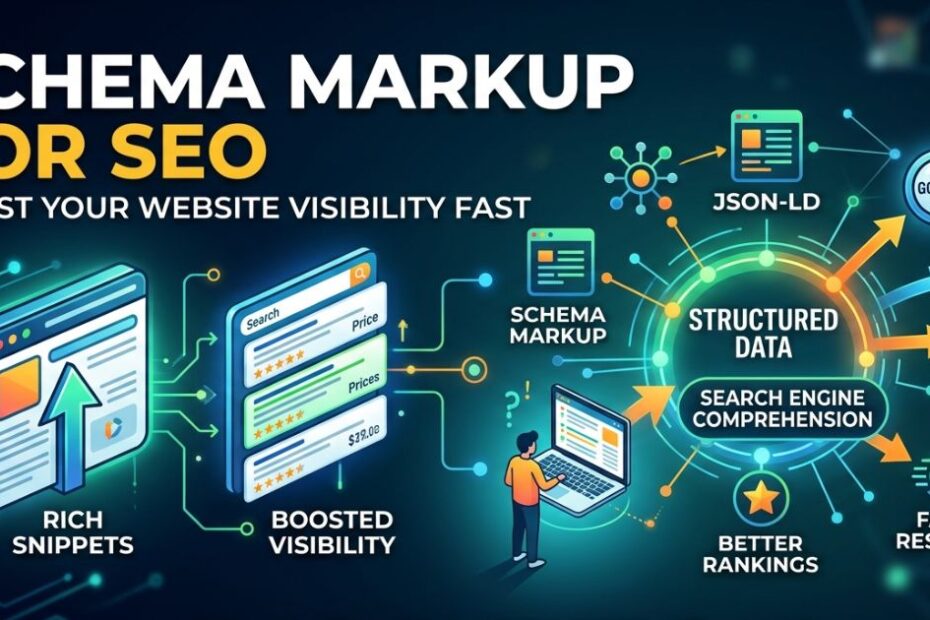
Schema markup is a powerful SEO technique that helps search engines understand your website content more clearly. By adding structured data to your pages, you make it easier for platforms like Google to display rich results such as star ratings, FAQs, and product details directly in search listings. This not only improves your visibility but also increases click-through rates. In today’s competitive digital landscape, implementing schema markup is a quick and effective way to enhance your website’s presence and attract more targeted traffic.
Understanding the Foundation of Structured Data
Search engines are incredibly smart. They read millions of pages every second. But they still need help understanding exactly what your website is about. They want to know if you are a local plumber, a cozy bakery, or a busy dental clinic. That is where different types of code come into play.
JSON-LD, Microdata, and RDFa
You might hear tech experts throw around big words like JSON-LD, Microdata, and RDFa. Do not let those terms scare you! They are simply different ways to write this special code.
JSON-LD is the absolute best format to use. Search engines strongly prefer JSON-LD. Why? Because it is clean, simple, and hidden in the background. It does not mess up the beautiful design of your website. You just embed structured data on web pages, and the search engines do all the heavy lifting. You do not need to be a computer genius to use it.
Feeding the Knowledge Graph
When you set this code up correctly, something magical happens. You feed your business information directly into the Knowledge Graph.
The Knowledge Graph is a massive database of facts. Search engines use it to answer questions instantly. If someone asks for the best coffee shop near them, the search engine looks at this database. By adding your structured data, you tell the database, “Hey! I am right here, and I sell the best coffee in town!” If you want your business to show up as a trusted fact, you must speak this language.
How Does This Impact Semantic SEO and Voice Search?
We live in a time where people talk to their phones more than they type on keyboards. Have you ever asked your smart speaker to find a pizza place near you? The answer you get relies heavily on semantic SEO.
The Power of Semantic SEO
Semantic SEO is just a fancy way of saying that search engines understand the true meaning behind your words. They do not just look at matching letters anymore. They look at the context.
When you add specific item properties to your site, you give search engines the exact context they need. You tell them that “Apple” means the delicious fruit you sell, not the giant computer company. This clarity gives you a massive advantage over competitors who leave search engines guessing.
Getting Ready for Generative AI Search
This clear communication prepares your business for Generative AI Search. Smart assistants and AI chatbots love organized information. They want to give users fast, accurate answers.
If a robot is going to recommend your shop to a hungry customer, you have to make it easy for the robot to understand you. Using the official Schema.org guidelines ensures that these modern AI tools pick your business over the guy down the street.
Essential Types for Local Business Success

Not all code is created equal. There are hundreds of specific tags you can use. But as a small business owner, you only need to focus on a few specific ones. These tags work pure magic for local shops and services.
LocalBusiness Tags
First up is the LocalBusiness schema. This is absolutely crucial for your success. It is the backbone of your local SEO.
This tag tells search engines your exact name, address, and phone number. It tells them your opening hours and the specific area you serve. When you use this tag, you stop being a random website and become a real, verified physical location. This dramatically improves your search engine visibility on maps and local searches.
Review and AggregateRating Code
Next, we have Review and AggregateRating code. You know those shiny gold stars you see in search results? Those are called rich snippets.
These stars build massive trust. Think about your own habits. Do you click on the boring blue link, or do you click on the link with 5 bright gold stars next to it? People click on the stars because they feel safe choosing a highly-rated business. It instantly triggers a feeling of trust and relief.
Step-by-Step Implementation Guide for Small Businesses
Now, you might be asking a very important question: how to implement schema markup on your site? Do not panic. You do not need to hire an expensive developer. You can do this yourself in just a few simple steps.
Using Free Tools
First, you can use a free schema markup generator. These are wonderful online tools built for regular people.
You simply visit a structured data generator website. It will ask you basic questions. What is your business name? What is your phone number? What time do you open on Tuesdays? You just type in the answers. The tool will then create JSON-LD markups for you automatically. You literally just click a button, and the code appears.
WordPress Plugins
If your website uses WordPress, things are even easier. You can download a dedicated plugin to automate schema markup across your entire site.
These plugins act as your personal schema manager. They organize everything behind the scenes. You fill in a few basic forms, and the plugin takes care of the complex coding. You never have to look at a single line of confusing text.
Pasting the Code
If you use the free generator tool, you will get a block of code. You just need to paste this code into the header of your website. Most website builders like Wix, Squarespace, or Shopify have a specific box just for this. It is as simple as copying text from an email and pasting it into a document.
How to Fix Common Errors?
Sometimes things go wrong. You might accidentally miss a piece of information or paste something twice. That is perfectly okay! Mistakes happen. The good news is that search engines actually give you the exact tools you need to fix them.
Spotting Mistakes
To make sure everything works perfectly, you need to test your markup with the Structured Data Testing Tool. This is a free service provided by the search engines.
You just type your website address into the tool. It scans your page instantly. If there is a mistake, it highlights the problem in bright red. It will tell you exactly which item properties are missing. For example, it might say, “You forgot to include your phone number.” You just add the number, and the red warning goes away. You can also use any highly-rated schema validator to double-check your work.
Doing a Regular Audit
It is a great idea to perform a regular schema audit. Search engine rules change over time. Keeping your data fresh and updated prevents annoying penalties.
Set a reminder on your calendar every 6 months to check your website. Run it through the tools. Make sure your business hours are still correct. Make sure your newest reviews are showing up. Proper schema management is like changing the oil in your car. A little bit of easy maintenance keeps the whole engine running smoothly for years.
Start Dominating Search Results Today
Let us recap what we learned. Adding this special vocabulary to your website is a powerful trick. It is sadly underutilized by most small businesses.
When you use this code, you directly boost your visibility. You earn beautiful, eye-catching rich results. You increase the number of people clicking on your website. Most importantly, you get your business ready for the exciting future of AI and voice search.
Are you ready to grow your business? Do not let your competitors steal the spotlight for another minute. Ask yourself: what is schema markup doing for your website right now? If the answer is absolutely nothing, it is time to take action.
Conclusion
Schema markup is a smart and effective way to improve your website’s SEO performance. By helping search engines like Google better understand your content, it increases your chances of appearing in rich results and featured snippets. This leads to higher visibility, better user engagement, and more organic traffic. Implementing schema may seem technical at first, but its long-term benefits make it a valuable strategy for any website aiming to grow online.
FAQs
What is schema markup in SEO and why is it important?
Schema markup is a type of structured data added to your website’s code to help search engines understand your content more effectively. It is important because it enhances how your pages appear in search results, often showing extra details like ratings, prices, or FAQs, which can attract more clicks and improve visibility.
Does schema markup directly improve search rankings?
Schema markup does not directly increase rankings, but it improves how your website appears in search results. These enhanced listings, known as rich snippets, can boost click-through rates and user engagement, which indirectly supports better SEO performance over time.
Is schema markup difficult to implement on a website?
It depends on your technical skills. Basic schema markup can be added using tools like plugins or generators without coding knowledge. However, advanced implementations may require some understanding of HTML or JSON-LD. Even simple schema additions can make a noticeable difference in SEO results.