

Reducing patient acquisition cost is important for healthcare clinics and medical businesses that want better profits and sustainable growth. To reduce patient acquisition cost effectively, providers must improve marketing strategies, target the right audience, and optimize ad campaigns to attract more patients while spending less money. Effective digital marketing and patient retention methods help lower overall acquisition costs.
What Should You Include in Patient Acquisition Cost?
Many practices undercount PAC because they only look at ad spend.
That is like weighing yourself while holding a bowling ball behind your back. The number may look better, but it is not honest.
Your true patient acquisition cost should include every cost tied to attracting and converting new patients.
Common PAC Cost Categories
| Cost Category | Examples | Why It Matters |
| Paid advertising | Google Ads, Facebook Ads, Instagram Ads, display ads | Usually one of the largest direct costs |
| Website costs | Hosting, design, maintenance, landing pages | Your website turns interest into appointments |
| SEO | Local SEO, content, technical fixes, Google Business Profile work | Builds long-term organic patient flow |
| Staff time | Front desk calls, referral coordination, patient follow-up | Labor affects acquisition efficiency |
| Referral marketing | Physician outreach, events, lunches, materials | Important for specialists and multi-location groups |
| Software | CRM, call tracking, online scheduling, review tools | Helps track and convert leads |
| Content creation | Blog posts, videos, patient guides, emails | Supports trust and search visibility |
| Reputation management | Review requests, responses, listing updates | Influences patient choice before they call |
If it helps bring in patients, count it.
That does not mean every dollar is bad. Some spending is smart. The problem is not spending money. The problem is spending money without knowing what it returns.
Why Patient Acquisition Cost Matters More Than Most Practices Think

Patient acquisition cost is not just a marketing metric. It is a growth metric, a finance metric, and a stress metric.
When PAC rises, your practice feels it everywhere.
You may see:
- Lower profit per patient
- More pressure to increase appointment volume
- Staff overwhelmed by low-quality leads
- Higher dependence on paid ads
- Less confidence in marketing decisions
- More “gut feeling” budget choices
When PAC drops, the opposite happens.
You gain breathing room. You can invest in better systems, better staff, better patient care, and better growth.
PAC Helps You Answer Big Questions
A clear patient acquisition cost tells you:
- Which marketing channels bring real patients
- Which campaigns waste money
- How much you can afford to spend
- Whether your growth is profitable
- How many new patients your budget can support
Without this number, you are flying the plane in fog with one eye closed. Brave? Sure. Wise? Not quite.
Patient Lifetime Value: The Other Half of the Equation
You cannot judge PAC without patient lifetime value, often called PLV or LTV.
Patient lifetime value is the estimated revenue a patient brings to your practice during their full relationship with you.
Here is the basic formula:
For example:
| Metric | Example |
| Average revenue per visit | $250 |
| Average visits per year | 3 |
| Average patient retention | 5 years |
| Patient lifetime value | $3,750 |
If it costs $250 to acquire a patient worth $3,750 over time, that is a strong return.
But if it costs $250 to acquire a patient worth $300, your margin is thinner than a paper gown.
What Is a Good LTV-to-PAC Ratio?
A common target is a 3:1 LTV-to-PAC ratio.
That means:
A higher ratio gives your practice more room to grow. A lower ratio may signal that your marketing is too expensive, your retention is weak, your pricing is off, or your patient mix needs work.
Typical Patient Acquisition Cost Benchmarks by Specialty

PAC varies across the United States. A dermatology practice in Miami, a dental office in Dallas, and an orthopedic group in Chicago will not have the same costs.
Competition, insurance mix, procedure value, local ad costs, and patient behavior all matter.
Still, benchmarks can help you spot red flags.
| Specialty | Typical PAC Range | Notes |
| Primary care | $100–$250 | Lower revenue per visit, retention matters |
| General dentistry | $150–$300 | Strong referral and review impact |
| Dermatology | $200–$400 | Can vary by cosmetic vs medical services |
| Orthopedics | $300–$600 | Higher value consults and procedures |
| Ophthalmology | $300–$700 | LASIK and surgical searches can be competitive |
| Cosmetic dentistry | $250–$500 | Strong need for reviews and before/after trust |
| Plastic surgery | $400–$800+ | High patient value, high competition |
These are not hard rules. They are guideposts.
Your best benchmark is your own trend over time. If PAC was $180 last quarter and is now $310 with no increase in patient quality, something needs attention.
How to Calculate Patient Acquisition Cost the Right Way
To reduce patient acquisition cost, you first need to calculate it cleanly.
Here is a simple step-by-step process.
Step 1: Pick a Time Period
Choose one clear period, such as:
- One month
- One quarter
- One year
Most practices should review PAC monthly and analyze deeper trends quarterly.
Step 2: Add Your Acquisition Costs
Include all costs tied to new patient growth.
For example:
- Google Ads: $3,000
- SEO agency: $2,000
- Social media ads: $1,000
- Website tools: $300
- Review software: $250
- Staff time for follow-up: $1,200
- Referral events: $750
Total acquisition cost: $8,500
Step 3: Count New Patients
Count only new patients acquired during the same period.
Let’s say you gained 50 new patients.
Step 4: Divide Costs by New Patients
$8,500 ÷ 50 = $170 PAC
That means you spent $170 per new patient.
Step 5: Break It Down by Channel
Overall PAC is useful. Channel-specific PAC is where the gold is buried.
| Channel | Spend | New Patients | PAC |
| Google Ads | $3,000 | 12 | $250 |
| SEO | $2,000 | 20 | $100 |
| Social ads | $1,000 | 5 | $200 |
| Referrals | $750 | 10 | $75 |
| Reviews/direct traffic | $550 | 3 | $183 |
This table tells a story.
SEO and referrals are efficient. Google Ads may still be useful, but it needs review. Social ads may work if those patients have strong lifetime value. The point is not to kill every expensive channel. Channel-specific PAC is where the gold is buried. Start your free 7-days trialat DigitalMarketerGurus to get channel-level attribution reporting from day one.
Proven Strategies to Lower Patient Acquisition Cost
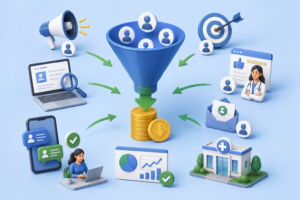
There is no magic button. If there were, every practice manager in America would have pressed it by now.
But there are proven moves that lower PAC without starving your growth.
1. Focus on High-Intent Patients
Not all leads are equal.
A person searching “orthopedic surgeon near me for knee pain” is much closer to booking than someone casually watching a wellness video on social media.
High-intent patients usually come from:
- Google Search
- Google Business Profile
- Local SEO
- Insurance directories
- Referral networks
- Specialty landing pages
- Review platforms
These patients already have a problem. Your job is to be visible, trustworthy, and easy to contact.
2. Improve Your Local SEO
Local SEO helps nearby patients find your practice when they search for care.
For most healthcare practices, this is one of the best long-term ways to lower PAC because organic traffic does not charge you per click.
Focus on:
- Updating your Google Business Profile
- Adding accurate services
- Keeping hours and phone numbers correct
- Publishing helpful service pages
- Earning positive reviews
- Building location-specific pages
- Making your website fast and mobile-friendly
If you have multiple locations, each location needs its own local SEO plan. Do not treat your practice like one giant blob on the map. Google does not love blobs. Patients do not either.
3. Build Stronger Service Pages
A vague website page does not convert. It politely waves goodbye as patients leave.
Each key service should have a page that answers:
- What is the service?
- Who is it for?
- What symptoms or problems does it treat?
- What happens during the visit?
- How much does timing matter?
- What insurance or payment options exist?
- How can the patient book?
A strong service page lowers PAC because it turns more visitors into appointments.
4. Use Paid Ads More Carefully
Google Ads can work beautifully for healthcare. It can also eat your budget like a raccoon in a bakery.
To improve paid ad performance:
- Use specific keywords, not broad ones
- Add negative keywords to block poor-fit searches
- Send clicks to matching landing pages
- Track calls and form fills
- Test ad copy monthly
- Pause campaigns that do not convert
- Review search terms every week
For example, a fertility clinic should not send every ad to the homepage. Someone searching “IVF consultation in Austin” should land on a page about IVF consultations in Austin.
Simple? Yes. Often ignored? Also yes.
5. Retarget Website Visitors
Many patients do not book on the first visit.
They compare providers. They read reviews. They ask a spouse. They check insurance. They get distracted by dinner, dogs, and life.
Retargeting helps bring them back.
You can use retargeting ads to remind past visitors about:
- Appointment booking
- Specific services
- Patient reviews
- Telehealth options
- New patient offers, where compliant
- Educational resources
Retargeting often costs less than reaching cold audiences because these people already know your practice.
6. Make Online Booking Ridiculously Easy
If booking an appointment feels like solving a puzzle, patients leave.
Your website should make scheduling clear and fast.
Best practices:
- Put a Book Appointment button in the top menu
- Add phone tap-to-call on mobile
- Offer online scheduling where possible
- Keep forms short
- Show office hours clearly
- Explain what happens after booking
- Offer text or email confirmation
Patients are not trying to admire your website architecture. They want help. Make the next step obvious.
7. Answer Calls Faster
Missed calls are expensive.
If your ads, SEO, and referrals drive patients to call, but no one answers, your PAC climbs fast.
A real-world scenario:
A dermatology practice spends $4,000 on Google Ads and gets 100 calls. If 30 calls go unanswered and only 20 patients book, the practice may think ads are too expensive.
But the real issue may be call handling.
Fixes include:
- Call tracking
- Staff training
- Overflow answering
- Missed-call text-back
- Clear phone scripts
- Appointment request follow-up within 5 minutes
Speed matters. A patient with pain, fear, or a tight schedule will not wait forever.
How Referral Programs Lower Patient Acquisition Cost
Referrals are often one of the lowest-cost patient acquisition channels.
Why? Trust arrives before the patient does.
A referred patient may come from:
- Another physician
- A current patient
- A family member
- An employer
- A community group
- A school, gym, or local organization
- An insurance network
The patient does not start from zero. Someone has already said, “Go here. They are good.”
That trust shortens the decision process.
How to Build a Better Referral Program
A strong referral system does not happen by accident. It needs structure.
Use this simple framework:
- Identify your best referral sources
- Physicians
- Physical therapists
- Dentists
- Urgent care centers
- Community partners
- Existing patients
- Make referrals easy
- Simple referral forms
- Direct phone line
- Online referral portal
- Fast appointment availability
- Clear instructions
- Close the loop
- Confirm the referral was received
- Update the referring provider when appropriate
- Thank referral partners
- Track referral outcomes
- Measure referral leakage
- How many referrals were received?
- How many became appointments?
- How many no-showed?
- Where did drop-offs happen?
- Stay visible
- Share helpful updates
- Offer educational materials
- Attend community events
- Build real relationships
Patient Referral Programs
Patient referrals can also work well, but healthcare practices must follow legal and ethical rules.
Avoid anything that could be seen as improper payment for medical referrals. Instead, focus on patient-friendly, compliant approaches:
- Ask happy patients to share their experience
- Encourage online reviews
- Offer educational materials they can pass along
- Make family scheduling easy
- Create a warm, memorable patient experience
The best referral program is not a gimmick. It is great care made easy to recommend.
Online Reviews The Trust Engine That Lowers PAC
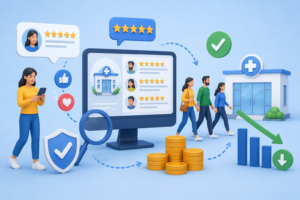
Patients read reviews. Even when they get a referral, they often check reviews before booking.
Your online reputation can either lower acquisition costs or quietly raise them.
A practice with strong reviews tends to get:
- More calls from organic search
- Better conversion from paid ads
- More trust from referral patients
- Higher click-through rates
- More direct bookings
A weak review profile does the opposite.
It forces your marketing to work harder because patients hesitate.
How to Improve Online Reputation
You do not need to beg for reviews. You need a simple system.
Try this:
- Ask at the right moment
- After a positive visit
- After a successful treatment milestone
- After helpful staff interaction
- Make it easy
- Send a text or email request
- Use a direct review link
- Keep instructions short
- Respond professionally
- Thank patients for positive reviews
- Address concerns calmly
- Never share private health details
- Monitor patterns
- Are wait times mentioned often?
- Is billing confusing?
- Are front desk experiences praised or criticized?
- Use feedback to improve
- Reviews are not just marketing.
- They are free operational intelligence.
If five patients complain about the same thing, believe them. The internet has handed you a map.
How AI and Automation Help Lower PAC
Automation can reduce patient acquisition cost by helping your practice convert more leads without adding more staff hours.
This does not mean replacing human care. Healthcare is still deeply personal. It means removing busywork so your team can focus on patients.
High-Impact Automation Tools
| Tool | What It Does | PAC Benefit |
| AI website chat | Answers common questions and captures leads 24/7 | Converts more website visitors |
| Online scheduling | Lets patients book without calling | Reduces friction |
| Automated reminders | Sends appointment reminders by text or email | Lowers no-shows |
| Review requests | Asks patients for reviews after visits | Builds reputation |
| CRM | Tracks leads, follow-ups, and sources | Improves attribution |
| Call tracking | Shows which channels drive calls | Improves budget decisions |
| Email follow-up | Nurtures leads who are not ready | Recovers lost opportunities |
A Real-World Example
Picture a multi-location dental group.
They spend heavily on ads and get plenty of website traffic. But patients often visit after hours, when the office is closed. Those visitors have questions about insurance, appointment times, and services.
Before automation, many visitors leave without booking.
After adding online scheduling, AI chat, and automated follow-up texts, more visitors become appointments. The ad budget stays the same, but new patient volume rises.
That means PAC drops.
Not because the practice shouted louder. Because it stopped letting interested patients slip away.
Digital Marketing Channels Compared
Every channel has a role. The trick is knowing which role.
| Channel | Strength | Weakness | Best Use |
| SEO | Low long-term cost, strong trust | Takes time | Sustainable patient growth |
| Google Ads | Fast visibility, high intent | Can be expensive | Competitive services and urgent demand |
| Social media ads | Good targeting, awareness | Lower intent | Cosmetic, wellness, community campaigns |
| Email marketing | Low cost, patient retention | Requires list quality | Reactivation and education |
| Referrals | High trust, low cost | Harder to scale quickly | Specialists and relationship-driven care |
| Reviews | Builds trust across channels | Requires consistent effort | Conversion and reputation growth |
| Telehealth | Expands access | Not ideal for all services | Follow-ups, consults, behavioral health |
The best strategy usually blends several channels. Relying on one channel is risky. Algorithms change. Ad costs rise. Referral sources shift.
A healthy practice has more than one front door.
Conclusion
Healthcare providers can reduce patient acquisition cost by focusing on targeted advertising, SEO, patient referrals, and optimized conversion strategies. Lower acquisition costs lead to higher profits, improved marketing performance, and long-term business growth in the healthcare industry..
FAQs
What is patient acquisition cost (PAC)?
Patient acquisition cost (PAC) is the total amount a healthcare practice spends to gain a new patient. This includes marketing expenses, advertising campaigns, website costs, staff time, SEO, social media promotions, and referral programs. Lowering PAC helps clinics and healthcare providers improve profitability while attracting more patients efficiently.
How can healthcare practices reduce patient acquisition cost?
Healthcare practices can reduce patient acquisition cost by improving local SEO, optimizing Google Business Profiles, running targeted advertising campaigns, using patient referral programs, and increasing online reviews. Creating high-quality content and improving appointment conversion rates also help attract patients at a lower marketing cost.
Why is digital marketing important for reducing patient acquisition cost?
Digital marketing allows healthcare providers to target the right audience more effectively than traditional advertising. Strategies like SEO, social media marketing, email campaigns, and paid search ads help generate qualified leads, improve patient engagement, and reduce overall acquisition costs by increasing conversion rates and maximizing marketing ROI.