

YouTube marketing in USA is a powerful digital marketing strategy that helps businesses reach a large and engaged audience through video content. Companies use YouTube to increase brand awareness, generate leads, promote products, and connect with customers. With millions of active users, YouTube offers businesses an effective platform to grow their online presence and drive conversions.
What Is YouTube Marketing and How Does It Work in the USA?
Let’s keep this simple.
YouTube marketing is using video content to attract, engage, and convert your audience on the world’s second-largest search engine. And yes YouTube is a search engine, not just a video site. People type questions into it the same way they Google things.
A simple definition (no jargon)
Think of YouTube as a giant library where people search for answers, entertainment, and reviews. Your job is to create videos that show up when they search — and keep them watching once they click.
How YouTube marketing works for U.S. audiences
American viewers are search-driven and review-hungry. Before buying, they look up “how to,” “best,” and “vs” videos. If your business answers those searches with helpful content, you earn attention without paying for every single view.
Organic vs paid the two engines
YouTube marketing runs on two engines:
- Organic: You create optimized videos that rank in search and suggested feeds over time.
- Paid: You run YouTube Ads to reach specific audiences instantly.
Smart brands run both. A U.S. roofing company, for example, might post how-to maintenance videos (organic) while running local ads to homeowners during storm season (paid).
Key takeaway: YouTube is a video platform and a search engine treat it like both.
Why YouTube Marketing Matters for U.S. Businesses in 2026

YouTube reaches a massive slice of the U.S. population across nearly every age group. According to Pew Research, it’s consistently one of the most widely used platforms among American adults more than almost any other social channel.
That’s a lot of eyeballs you can’t afford to ignore.
Reach and viewing trends
Americans watch YouTube on phones, laptops, and increasingly on TVs in their living rooms. That connected-TV growth means your videos can play on a 65-inch screen, not just a tiny mobile window.
Search visibility ranking twice
Here’s a hidden bonus: YouTube videos often rank inside Google search too. So one strong video can earn you visibility on two of the biggest search engines on earth. That’s double exposure for a single piece of content.
Trust and buyer education
Video builds trust faster than text. A viewer who watches you explain something for three minutes feels like they know you. That familiarity shortens the path to a sale.
Common misconception: “YouTube is only for big brands or influencers.” Wrong. Small businesses with sharp, helpful videos often outrank giant companies that post bland corporate fluff.
Key takeaway: YouTube is a compounding asset, not a one-off campaign.
Organic YouTube Marketing vs YouTube Ads: Which Is Better?
This is the question almost every business owner asks. The honest answer? It depends on your goals, budget, and timeline.
Here’s a clear comparison:
| Factor | Organic YouTube | YouTube Ads |
| Cost | Low (mostly time) | Pay per view/click |
| Speed to results | Slow (weeks to months) | Fast (days) |
| Longevity | Long-lasting | Stops when budget stops |
| Best use case | Trust and search visibility | Quick reach and promotions |
| Ideal business stage | Building authority | Launches and scaling |
| Measurement | Watch time, rankings | Cost per view, conversions |
When to choose organic
Pick organic YouTube growth when you want lasting visibility and have patience. It’s perfect for educational content that answers customer questions forever.
When to choose ads
Choose YouTube Ads for business when you need fast results a product launch, an event, or a seasonal promotion. Ads guarantee reach, but the moment you stop paying, the views stop too. If you’re also running paid campaigns across other channels, explore our E-Commerce Marketing Services for a fully integrated paid strategy
How to blend both
The winning move? Run both. Use ads to boost your best organic videos and build retargeting audiences. One feeds the other.
Key takeaway: Most U.S. businesses win by combining organic and paid, not picking one side.
How to Create a YouTube Marketing Strategy (Step-by-Step)
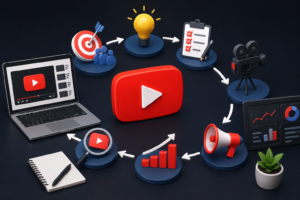
Strategy beats luck every time. Here’s how to create a YouTube marketing strategy that actually works.
- Define goals and KPIs. Decide what success means. More leads? Brand awareness? Sales? Pick clear targets so you know what you’re chasing. Understanding Performance Analytics helps you set and track those KPIs accurately.
- Research your U.S. audience and search intent. Understand what your American customers search for and what problems keep them up at night. Good audience targeting starts here.
- Do YouTube keyword research. Use YouTube’s search bar autocomplete and tools like TubeBuddy to find what people type. This is the foundation of YouTube SEO. Pair this with a broader SEO Services strategy for maximum search coverage.
- Plan content pillars. Build three buckets: educational videos, product videos, and thought-leadership videos. Variety keeps your channel fresh and useful.
- Optimize titles, descriptions, tags, and thumbnails. Your thumbnail and title decide whether people click. Treat them like a movie poster irresistible and honest.
- Publish, distribute, and repurpose. Share videos on your site, email list, and social channels. Slice long videos into Shorts and clips to stretch their reach.
Example: A U.S. bakery could build one pillar around “easy home baking tips.” Each video answers a real search, builds trust, and quietly promotes their products.
Key takeaway: Strategy before content always.
YouTube Shorts Strategy for U.S. Businesses
Don’t sleep on YouTube Shorts marketing. These bite-sized vertical videos are a discovery rocket.
Why Shorts are a discovery engine
Shorts get pushed to brand-new audiences who’ve never heard of you. They’re the friendly stranger who introduces you at the party.
Short-form vs long-form
Here’s the magic combo:
- Shorts grab attention and attract new viewers.
- Long-form videos build trust and convert them into customers.
One feeds the other. A viewer discovers your Short, likes your vibe, then binges your longer content.
Shorts ideas that convert
- Quick tips your audience can use today
- Behind-the-scenes peeks at your business
- Fast answers to common customer questions
- Myth-busting clips that grab attention
Example: A B2B software company posts 30-second “one-feature-in-action” Shorts, then links to a full demo. Top of funnel meets bottom of funnel.
Key takeaway: Use Shorts to attract, long-form to convert.
Building a YouTube Content Calendar
Consistency is the secret sauce. A YouTube content calendar turns YouTube from a random side project into a reliable system.
Here’s a simple sample to copy:
| Week | Video Type | Topic/Keyword | Format | Goal/KPI |
| 1 | Educational | “How to start YouTube marketing” | Long | Watch time |
| 2 | Short | “3 thumbnail mistakes” | Short | New viewers |
| 3 | Product | “Product walkthrough” | Long | Leads |
| 4 | Thought leadership | “2026 video trends” | Long | Brand awareness |
How often should you post?
Quality beats quantity. One strong video per week is far better than five rushed ones. Pick a pace you can sustain for months.
Batching and repurposing
Film several videos in one session, then edit over the following weeks. Turn one long video into three Shorts, a blog post, and an email. Work smarter, not harder.
Key takeaway: Consistency beats intensity a calendar protects your momentum.
YouTube Marketing Tools and Channel Audit Checklist

You don’t need a fancy studio. You need the right tools and regular check-ups.
Essential tools
- Analytics: YouTube Studio (free and powerful)
- Keyword research: TubeBuddy or vidIQ
- Thumbnails: Canva
- Scheduling: YouTube’s built-in scheduler or third-party planners
Free vs paid options
Start free. YouTube Studio and Canva cover the basics beautifully. Upgrade to paid tools only when a task becomes a real bottleneck not because a YouTube guru told you to.
10-point channel audit checklist
Run this YouTube channel audit every quarter:
- Is your channel banner clear and on-brand?
- Does your channel description explain who you help?
- Are your titles keyword-rich and clickable?
- Do thumbnails look consistent and crisp?
- Are descriptions filled with helpful detail?
- Are videos organized into playlists?
- Do you have a strong channel trailer?
- Are you posting on a consistent schedule?
- Do videos include clear calls to action?
- Are your top videos linked to landing pages?
Key takeaway: Audit quarterly to catch what’s silently underperforming.
Get a Free: YouTube Channel Audit
How Much Does YouTube Marketing Cost in the USA?
Let’s talk money honestly. YouTube marketing cost varies wildly based on who does the work.
| Approach | Typical Cost Range | Best For |
| DIY organic | Mostly your time | Beginners, tight budgets |
| Freelancer/creator | $500–$3,000/month | Small businesses scaling up |
| Agency | $3,000–$15,000+/month | Established brands |
| YouTube Ads spend | $500–$10,000+/month | Fast reach and launches |
What drives the cost
Production quality, posting frequency, editing complexity, and ad budgets all push costs up or down. A talking-head video shot on your phone costs almost nothing. A polished animated explainer costs plenty.
How to set a realistic budget
Start lean. Prove the model works with low-cost videos, then scale your spend as results roll in.
Key takeaway: You can start small and grow your budget as ROI proves itself.
How to Measure YouTube Marketing Success and ROI
Views feel nice, but they don’t pay the bills. Let’s track what actually matters.
Metrics that matter
- Watch time: How long people stay. YouTube loves it.
- Click-through rate (CTR): How many clicks your thumbnail earns.
- Retention: Whether viewers stick around or bounce.
- Conversions: Leads, sales, and sign-ups the real prize.
Vanity metrics to ignore
Don’t obsess over raw view counts or subscriber numbers alone. A video with 500 views that books 10 sales beats one with 50,000 views and zero customers.
Here’s a quick benchmark guide:
| Metric | What It Tells You | Healthy Benchmark |
| CTR | Thumbnail/title appeal | 4–10% |
| Avg. view duration | Content quality | 50%+ retention |
| Watch time | Overall engagement | Growing month over month |
| Conversion rate | Business impact | Tied to your goals |
Tracking leads and YouTube marketing ROI
Use trackable links and landing pages so you know exactly which videos drive lead generation. Connect YouTube to your analytics so every dollar has a story.
Key takeaway: Tie every video back to a business goal, not just views.
What 15+ Years of Content Strategy Taught Me About YouTube
After more than fifteen years helping brands grow online, I’ve watched a clear pattern play out again and again.
The biggest mistake U.S. businesses make
They treat YouTube like a content dump. They post randomly, ignore search intent, and quit after eight videos because “it didn’t work.” The fix? Treat YouTube as a search asset that compounds over time.
A real pattern that separates winners from quitters
The winners are boring in the best way they show up consistently. I’ve seen a small consulting client go from 200 views per video to thousands, simply by publishing one helpful video every single week for a year. No tricks. Just consistency and YouTube SEO basics done right.
My field-tested rule
Here’s my rule: answer one real customer question per video. When every video solves a problem someone is actively searching for, growth stops being a guessing game.
Key takeaway: The brands that win treat YouTube as a search engine, not a stage for vanity videos.
Common YouTube Marketing Mistakes to Avoid
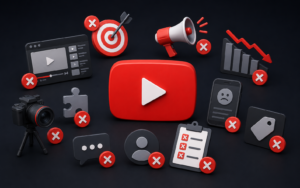
Even smart businesses trip over the same hurdles. Dodge these:
- Inconsistent posting. Ghosting your channel kills momentum.
- Ignoring video SEO. No keywords means no discovery.
- Weak thumbnails and titles. If nobody clicks, nothing else matters.
- No clear call to action. Tell viewers exactly what to do next.
- Chasing views over conversions. Fame is fun; revenue pays rent.
Key takeaway: Most failures come from strategy gaps, not bad camera work.
Conclusion
YouTube marketing in USA continues to be one of the most effective ways to build brand visibility and engage potential customers. By creating valuable video content, optimizing videos for search, and using targeted advertising, businesses can achieve long-term growth and strengthen their digital marketing efforts.
FAQs
What is YouTube marketing?
YouTube marketing is using video content, search optimization, and paid ads to grow your brand and reach customers on YouTube. It combines organic growth with paid campaigns to build awareness, trust, and leads over time.
How do I start YouTube marketing in the USA?
Start by defining your goal, researching what your U.S. audience searches for, and creating helpful videos optimized with the right keywords. Post consistently, track your results, and adjust based on what your data shows.
Is YouTube marketing worth it for small businesses?
Absolutely. Small businesses can compete with big brands by creating focused, helpful videos that answer real customer questions. It’s one of the most cost-effective ways to build trust and long-term visibility.
Can YouTube marketing generate leads?
Yes. By linking videos to landing pages, using clear calls to action, and retargeting viewers with ads, you can turn casual watchers into real leads. The key is giving viewers a clear next step.
How long does it take for YouTube marketing to work?
Organic results usually take three to six months of consistent posting before momentum builds. Paid YouTube Ads deliver faster reach, often within days, but lasting growth comes from steady, search-optimized content.