
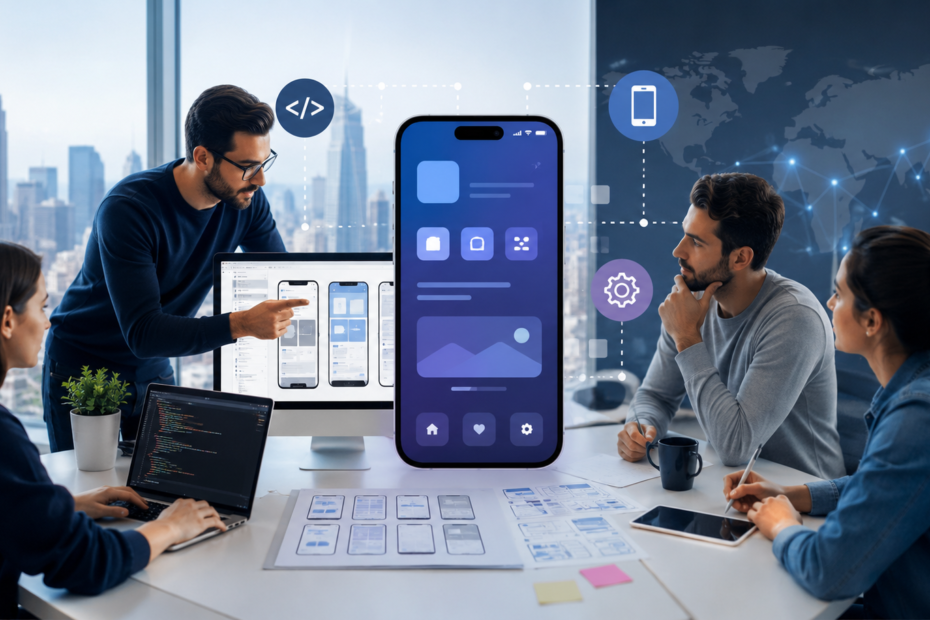
A mobile app development company in the USA helps businesses create innovative, user-friendly, and scalable mobile applications for iOS and Android platforms. From startup ideas to enterprise solutions, professional developers deliver custom apps that enhance customer engagement, streamline operations, and drive business growth.
What Is a Mobile App Development Company in the USA?
A mobile app development company in USA is a business that builds apps from start to finish. Think of them like a construction crew, but instead of houses, they build digital products you tap and swipe on your phone.
They handle everything: the idea, the look, the code, the testing, and the launch. Some focus only on building. Others guide you through the whole journey, from a rough sketch to a finished app in the App Store.
What Does a U.S. App Development Company Actually Do?
A good company covers six big areas:
- Strategy: They help shape your idea into a clear plan.
- Design: They make your app look great and feel easy to use.
- Development: They write the code that makes everything work.
- Quality checks: They test for bugs before your users ever see them.
- Launch: They get your app approved and live in app stores.
- Support: They keep your app updated and running smoothly.
In short, they take care of the hard parts so you can focus on growing your business.
Who Should Hire One Startups, Enterprises, or Nonprofits?
The honest answer? All three. But each has different needs.
- Startups want speed and a smart first version to test their idea.
- Enterprises need scale, security, and apps that fit into big systems.
- Nonprofits often work with smaller budgets but still need reliable, friendly tools.
The best partner adjusts to where you are. A startup founder and a hospital director need very different things, and a strong company knows that.
Mobile App Development Services Offered by U.S. Companies
Most companies offer a full menu of services. Here’s a simple breakdown of what you’ll find and who benefits most.
| Service | What It Means | Who It Helps Most |
| Strategy & discovery | Planning your app before building | Startups, new ideas |
| UI/UX design | Making the app look and feel great | Everyone |
| App development | Writing the actual code | Everyone |
| Backend & APIs | The engine behind the app | Apps with logins, data, payments |
| QA & testing | Finding and fixing bugs | Everyone |
| Launch & support | Going live and staying healthy | Everyone |
Let’s unpack the most important ones.
Strategy, Discovery, and Product Roadmapping
Before a single line of code is written, smart teams plan. This step is called product discovery. They study your idea, your users, and your competitors.
Why does this matter? Because planning early saves you money later. A clear roadmap stops you from building features nobody wants.
UI/UX Design and Rapid Prototyping
This is where your app gets its look and feel. User experience design makes sure people can use your app without getting confused or frustrated.
Designers often build a clickable prototype first, like a paper sketch you can actually tap. You see how it works before it’s built, so you can fix problems cheaply and fast.
Native, Cross-Platform, and Progressive Web App Development
There are three main ways to build an app:
- Native: Built separately for iPhone and Android. Fast and powerful.
- Cross-platform: One codebase works on both. Cheaper and quicker.
- Progressive web apps: Work in a browser but feel like real apps.
Each has trade-offs. We’ll compare them more later so you can choose wisely.
Backend, API Integration, and Cloud Architecture
This is the invisible part of your app. The backend is like the kitchen of a restaurant: customers never see it, but nothing works without it.
It stores data, handles logins, and connects to other tools through APIs. Good mobile software development means building a backend that stays fast even when thousands of people use your app at once.
QA, App Store Submission, and Post-Launch Support
Testing finds bugs before your users do. Nobody likes an app that crashes, right?
After testing, the team submits your app to the App Store or Google Play. Then comes app maintenance, the ongoing care that keeps your app fresh, safe, and working as phones and rules change.
How Much Does It Cost to Build a Mobile App in the USA?

Let’s talk money, because this is the question everyone really wants answered.
The truth is, costs vary a lot. A simple app is like a bicycle. A complex app is like a car. Both get you places, but they cost very different amounts.
Here’s a realistic guide:
| App Type | Complexity | Estimated Cost | Timeline |
| Basic app | Simple features | $10,000–$40,000 | 2–4 months |
| Mid-level app | Logins, payments, data | $40,000–$120,000 | 4–7 months |
| Complex app | Heavy features, integrations | $120,000–$250,000+ | 7–9+ months |
These are ballpark numbers. Your real quote depends on what you need. For comparison, you can also review SEO services cost to understand how digital investments stack up across different channels.
Cost Factors That Influence Your Quote
Several things move the price up or down:
- Number of features: More features mean more work.
- Platforms: Building for both iPhone and Android costs more.
- Integrations: Connecting to payment or maps tools adds time.
- Compliance needs: Health or finance rules require extra security.
- Team experience: Senior developers charge more but often work faster.
So when one company quotes $30,000 and another says $90,000, they may simply be picturing different apps.
App Development Pricing Models Explained
Companies usually offer three ways to pay:
- Fixed price: You agree on one set cost. Best when your plan is clear and won’t change.
- Time and materials: You pay for the hours worked. Best when your idea may shift along the way.
- Dedicated team: You hire a full team monthly. Best for big, ongoing projects.
Each model fits a different situation. There’s no single “best” one, only the best one for you.
What Ongoing App Maintenance Costs After Launch
Here’s something many people forget: an app is never truly “finished.” Phones update. Rules change. Bugs appear.
A common rule of thumb is to budget 15% to 25% of your build cost per year for app maintenance. So a $50,000 app might cost $7,500–$12,500 yearly to keep healthy.
This covers updates, security patches, and small improvements. Planning for it now saves you painful surprises later.
The Mobile App Development Process Step by Step
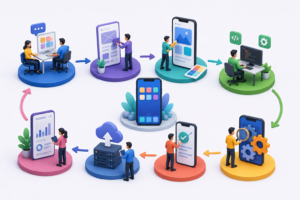
Wondering how an app actually gets made? Here’s the journey, step by step.
- Product discovery and idea validation Test if people actually want your app before building it.
- UX/UI design and prototyping Turn your idea into clickable screens you can try.
- Architecture and tech stack decisions Choose strong foundations that support growth and scalability.
- Agile development in sprints Build in small chunks you can review every couple of weeks.
- QA, security, and accessibility testing Check for bugs, protect data, and make the app usable for everyone.
- App store launch and submission Get approved and go live, ideally on the first try.
- Monitoring, updates, and maintenance Keep improving based on real user feedback.
This roadmap gives you a clear standard. If a company skips steps like discovery or testing, that’s a warning sign.
How to Validate Your App Idea Before You Build
Before you spend a dollar on building, prove your idea works. This step alone can save you thousands.
Steps to Test Demand Before Investing
Try these simple checks:
- Talk to real people. Ask future users if they’d actually use your app.
- Study competitors. See what already exists and where it falls short.
- Scope an MVP. Plan a small, simple first version to test the waters.
Think of it like tasting soup before serving it to guests. A quick test now prevents a big mistake later. This validation mindset also applies to social media marketing packages testing small before scaling big is always smart digital strategy.
When to Choose an MVP vs a Full Product Build
An MVP, or “minimum viable product,” is the smallest version of your app that still works and proves your point.
- Choose an MVP when you’re testing a new idea or have a tight budget.
- Choose a full build when you already know there’s strong demand and you’re ready to scale.
Most smart founders start small, learn fast, then grow.
App Architecture and Tech Stack Decisions That Affect Scalability
Behind every great app are big choices about how it’s built. These decisions affect speed, cost, and how well your app grows.
| Your Situation | Recommended Approach |
| Tight budget, both platforms | Cross-platform (React Native or Flutter) |
| Need top speed and performance | Native (Swift, Kotlin) |
| Simple info or browser-based tool | Progressive web app |
| Expecting rapid growth | Scalable cloud backend |
Let’s look at the big debates.
Native vs Cross-Platform App Development
This is one of the biggest choices you’ll face. Here’s a quick comparison:
| Factor | Native | Cross-Platform |
| Performance | Excellent | Very good |
| Cost | Higher | Lower |
| Time to market | Slower | Faster |
| Maintenance | Two codebases | One codebase |
If you need raw power and rich features, native wins. If you want speed and savings, cross-platform often makes more sense.
React Native vs Flutter Which to Choose?
These are the two most popular cross-platform tools. Both build one app that works on iPhone and Android.
- React Native is widely used and backed by a huge community.
- Flutter is loved for smooth, beautiful designs and fast performance.
Honestly, both are great. Your team’s experience often matters more than the tool itself.
Building for Scalability, Security, and Accessibility
Three things future-proof your app:
- Scalability: Can it handle 10 users today and 10,000 tomorrow?
- Security: Does it protect user data? Industries like health and finance must follow strict rules like HIPAA and PCI.
- Accessibility: Can people with disabilities use it? Following ADA and WCAG guidelines widens your audience and is simply the right thing to do.
A forward-thinking partner builds with all three in mind from day one.
How to Choose the Right Mobile App Development Company in the USA
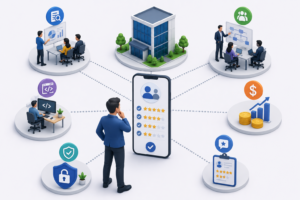
This is the big one. The right partner can make your project soar. The wrong one can drain your budget and patience.
Vendor Evaluation Criteria Checklist
Use this checklist to score any company you’re considering:
- Portfolio: Have they built apps like yours before?
- Reviews: Do real clients praise them?
- Communication: Do they reply clearly and quickly?
- Security practices: Do they take data protection seriously?
- IP ownership: Will you fully own your app and code?
- Support terms: Do they offer help after launch?
If a company checks every box, you’re on solid ground.
Questions to Ask Before Signing a Contract
Before you commit, ask these:
- Can you show me apps you’ve built in my industry?
- How do you handle product discovery and planning?
- Which project tools will we use to stay updated?
- How do you test for bugs and security issues?
- Who owns the code when we’re done?
- What support do you offer after launch?
Their answers reveal a lot. Vague replies are a red flag.
Agency vs Freelancer vs In-House What’s Best?
Here’s how the three options compare:
| Factor | Agency | Freelancer | In-House Team |
| Cost | Medium–High | Low | High |
| Speed | Fast | Varies | Slower to build |
| Skills | Full team | Limited | Full but costly |
| Best for | Most projects | Small tasks | Long-term needs |
For most businesses, an agency offers the best mix of skill and speed without the cost of hiring full-time staff.
Red Flags to Watch For
Steer clear if you spot these warning signs:
- Promises that sound too good to be true
- Vague pricing or no clear contract
- No portfolio or live apps to show
- Slow or confusing communication
- No plan for support after launch
Trust your gut. If something feels off, keep looking.
Industries U.S. App Development Companies Serve
Top companies build apps across many fields. Each comes with its own needs and rules.
- Healthcare: Patient apps that follow strict HIPAA privacy rules.
- Fintech: Banking and payment apps that demand top security.
- Ecommerce: Shopping apps with smooth checkout and browsing.
- On-demand: Ride, food, and delivery apps.
- Education: Learning tools for schools and students.
- Logistics: Tracking and fleet management apps.
- Nonprofit: Friendly tools that fit smaller budgets.
When a company knows your industry, they spot problems faster and build smarter. Experience in your field is a real advantage.
First-Hand Experience and Expert Insight

After years of working on app projects, a few truths stand out clearly.
Lessons From Building Apps for U.S. Clients
Here’s what experience teaches:
- Skipping discovery causes scope creep. When teams build without a clear plan, projects balloon in cost and time. A focused planning phase keeps everyone on track.
- Communication makes or breaks projects. The most successful apps come from teams that talk often and honestly. Weekly check-ins prevent small issues from becoming big ones.
- Launch isn’t the finish line. Many founders relax after launch, then wonder why downloads stall. The real work, listening and improving, starts after go-live.
These lessons aren’t theory. They come from watching projects succeed and stumble in the real world.
A Mini Case Snapshot
Picture a small health startup with a big dream and a tight budget. They wanted a full-featured app right away.
Instead, the team suggested starting with an MVP, just the core feature users needed most. They built it, launched in four months, and gathered real feedback. Within a year, that feedback shaped a stronger full version, and downloads climbed steadily.
The lesson? Starting small and listening closely beat rushing into a giant, risky build. Smart planning won the day.
Why Choose a USA-Based App Development Partner
You have options all over the world. So why pick a partner here at home?
A few honest reasons:
- Time-zone alignment: You meet during your workday, not at midnight.
- Clear communication: Fewer language gaps and faster replies.
- Compliance know-how: They understand U.S. rules like data privacy and accessibility.
- Accountability: A local partner is easier to hold responsible.
Offshore teams can save money, and that’s a fair choice for some. But for projects where clear communication, trust, and compliance matter most, a U.S.-based partner often delivers smoother results and fewer surprises.
Conclusion
Choosing the right mobile app development company in the USA can significantly impact the success of your digital project. With expert development, modern technologies, and ongoing support, businesses can launch high-performing mobile applications that meet user expectations and achieve long-term goals.
FAQs
What does a mobile app development company do?
A mobile app development company plans, designs, builds, tests, and launches apps for phones and tablets. They also offer ongoing support after launch. Many guide you through the entire journey, from your first idea to a finished product in the app stores.
How long does it take to build a mobile app?
Most apps take between 2 and 9 months to build. Simple apps with few features can be ready in a couple of months. Complex apps with logins, payments, and integrations take longer because they need more design, coding, and testing.
How much does it cost to hire an app development company in the USA?
Costs usually range from $10,000 for simple apps to $200,000 or more for complex ones. The final price depends on features, platforms, integrations, and compliance needs. Always ask for a detailed quote so you know exactly what’s included.
Is native or cross-platform development better for my app?
It depends on your goals. Native apps offer top performance and are great for feature-rich projects. Cross-platform apps cost less and launch faster because one codebase works on both iPhone and Android. Many businesses choose cross-platform to save time and money.
What is included in app maintenance after launch?
App maintenance covers bug fixes, security updates, performance improvements, and small new features. It keeps your app working as phones and app store rules change. Budget around 15% to 25% of your build cost each year for ongoing care.
How do I choose the right app development partner?
Check their portfolio, read client reviews, and test how clearly they communicate. Ask about security, code ownership, and post-launch support. The best mobile app development company in USA for you will match your industry, budget, and goals while answering your questions honestly.